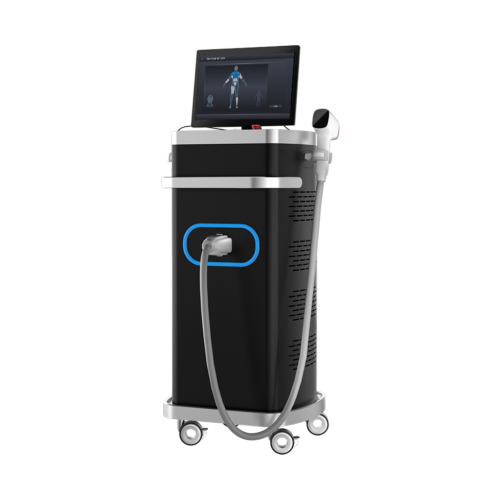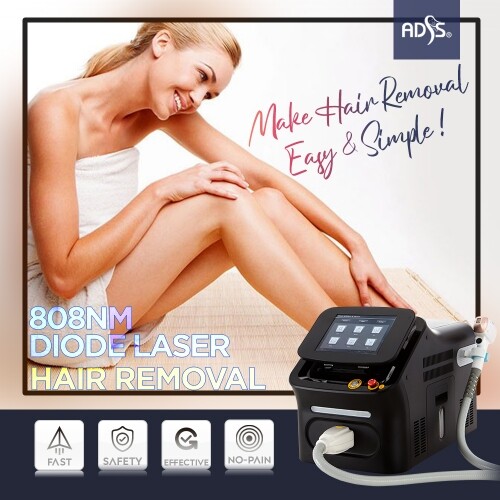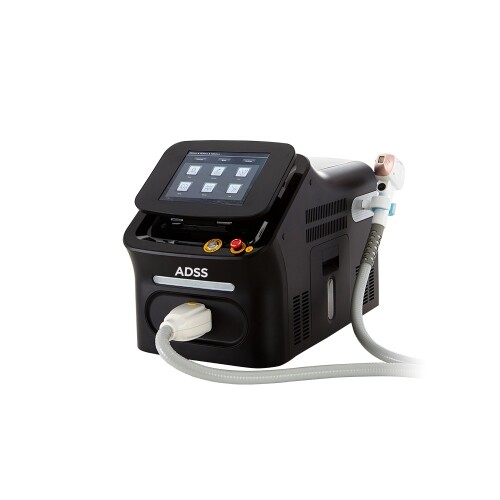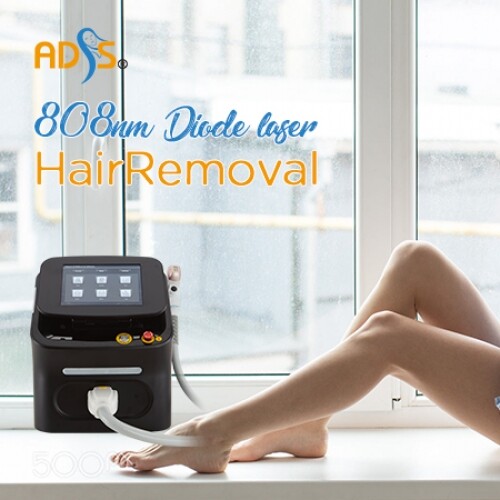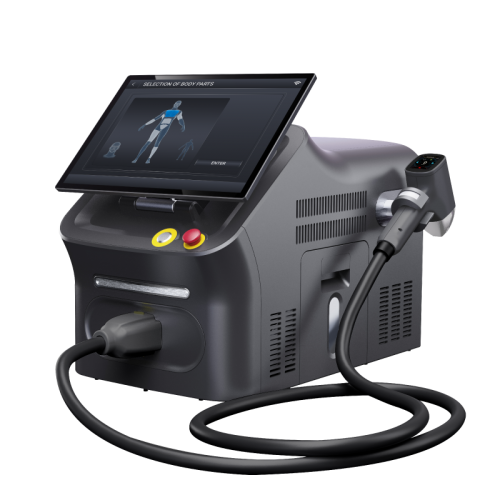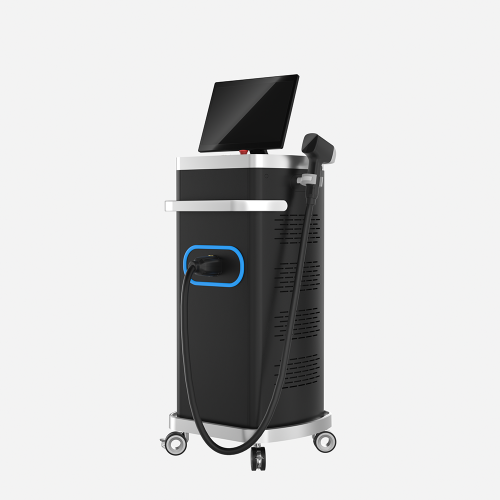


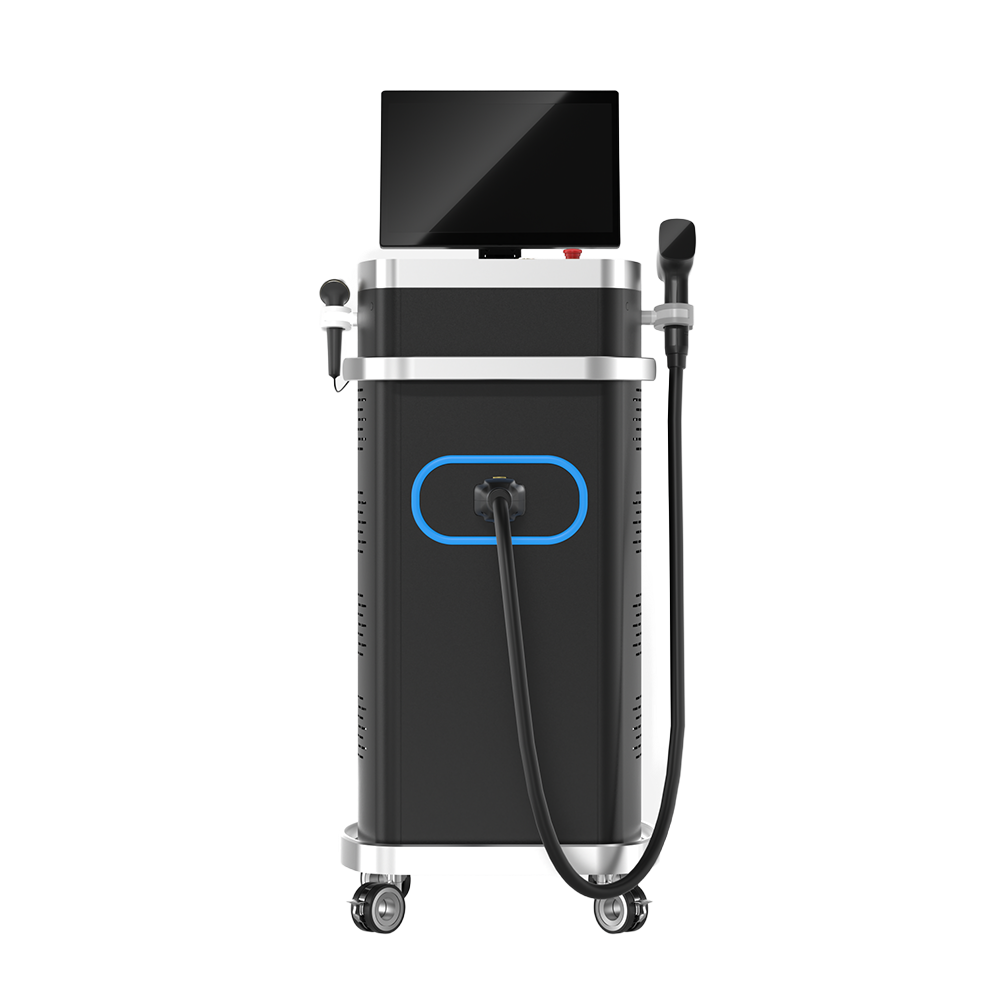

Product Overview
ADSS FDA Diode Laser Hair Removal Machine redefines laser hair removal by integrating 755nm, 808nm, 940nm, and 1064nm wavelengths in one intelligent platform. It offers unmatched flexibility, safety, and comfort—providing effective treatment for all skin types and hair colors with enhanced precision and efficiency.

How It Works of FDA Diode Laser Hair Removal Machine
A diode laser hair removal machine uses semiconductor laser technology to generate optical energy at specific wavelengths. When this energy reaches the treatment area, melanin in the hair shaft and follicular structures absorbs part of the light and converts it into heat.
This thermal effect can damage structures involved in hair growth, helping achieve progressive, long-term hair reduction. The process depends on selective photothermolysis, which aims to concentrate thermal effects in the intended target while limiting unwanted heating of surrounding tissue.
Benefits of FDA Diode Laser Hair Removal Machine
Professional Treatment Capabilities: Diode laser technology offers a dedicated platform for businesses providing professional hair reduction services.
Adaptable Treatment Planning: Model-dependent parameter controls allow trained operators to select suitable treatment settings for different clients and body areas.
Improved Client Experience: Appropriate cooling and professional treatment protocols can help manage heat-related discomfort during treatment.
Expanded Service Portfolio: Clinics and salons can add laser hair reduction to their existing aesthetic services and address a broader range of customer needs.
Repeat-Service Opportunities: Since long-term hair reduction generally requires multiple sessions, businesses can develop structured treatment programs and encourage ongoing client engagement.
Commercial Product Differentiation: Distributors can offer diode laser systems as a specialized equipment category within a wider professional aesthetic portfolio.
Technical Advantages of FDA Diode Laser Hair Removal Machine
Semiconductor Laser Technology: Diode laser systems use semiconductor-based laser sources designed to generate controlled optical output at specified wavelengths.
Wavelength-Based Targeting: Appropriate wavelength selection helps determine how light interacts with melanin and penetrates the skin, influencing the device's treatment characteristics.
Controlled Energy Delivery: Adjustable energy density and pulse duration, where available, allow operators to follow appropriate treatment protocols within the specified limits.
Integrated Thermal Management: Cooling components help manage heat generated during operation, while handpiece cooling can help reduce excessive epidermal heating during treatment.
Configurable Operating Modes: Available treatment modes can accommodate different workflows, provided they are used according to the manufacturer's instructions.
System-Level Engineering: Laser source performance, power electronics, cooling components, handpiece construction, and control software collectively influence overall equipment operation.





 Download Brochure